

The Krono Nutrition Fuelling Guide
How to fuel your effort
What to eat — and how much — before, during and after, so you start strong, hold your pace, and recover faster. One complete guide to the three phases of every effort.
9 min read·Grounded in sports-nutrition research
Every effort has three chapters: the hours before you start, the work itself, and the recovery that follows. Fuel each one well and they compound - you begin strong, hold your pace, and bounce back ready for the next session.
Get any one of them wrong and you feel it. This guide walks through all three, with the numbers that actually matter - how much carbohydrate, when - and the natural fuel that fits each phase.
First, the one thing that matters most: carbohydrate
Your muscles run primarily on glycogen - carbohydrate stored in the muscles and liver. It's your fuel tank, and it's finite. Fat fuels you too, but carbohydrate is the high-octane source your body reaches for when the pace picks up, and it's the one that runs out.
So most fuelling questions come down to carbohydrate: filling the tank before, topping it up during, and restocking it after. The single most useful number to remember is for long efforts: for anything over about 90 minutes, aim for 60 to 90 grams of carbohydrate per hour - adjusted for your intensity, what you ate beforehand, and how your stomach handles it. We'll break down every phase below, and there's a full reference table at the end.
Phase 01 — Preparation
Fill the tank before you burn it
For any effort longer than about 90 minutes, how full your glycogen tank is at the start is one of the biggest predictors of how you'll finish. In the days before a big event, endurance athletes progressively raise their daily carbohydrate - often into the range of 7–12 g per kilogram of body weight per day - to load the muscles and liver.
Closer in, the pre-effort meal does the fine-tuning. In the 1 to 4 hours before a long session, eat roughly 1–4 g of carbohydrate per kilogram of body weight, keeping it lower in fat and fibre so it digests cleanly and doesn't sit heavy. A glucose–fructose blend is ideal - it tops up liver glycogen, the reserve that keeps your blood sugar steady early on. And start hydrated: fluid and a little sodium on board beats trying to catch up once you're already behind.
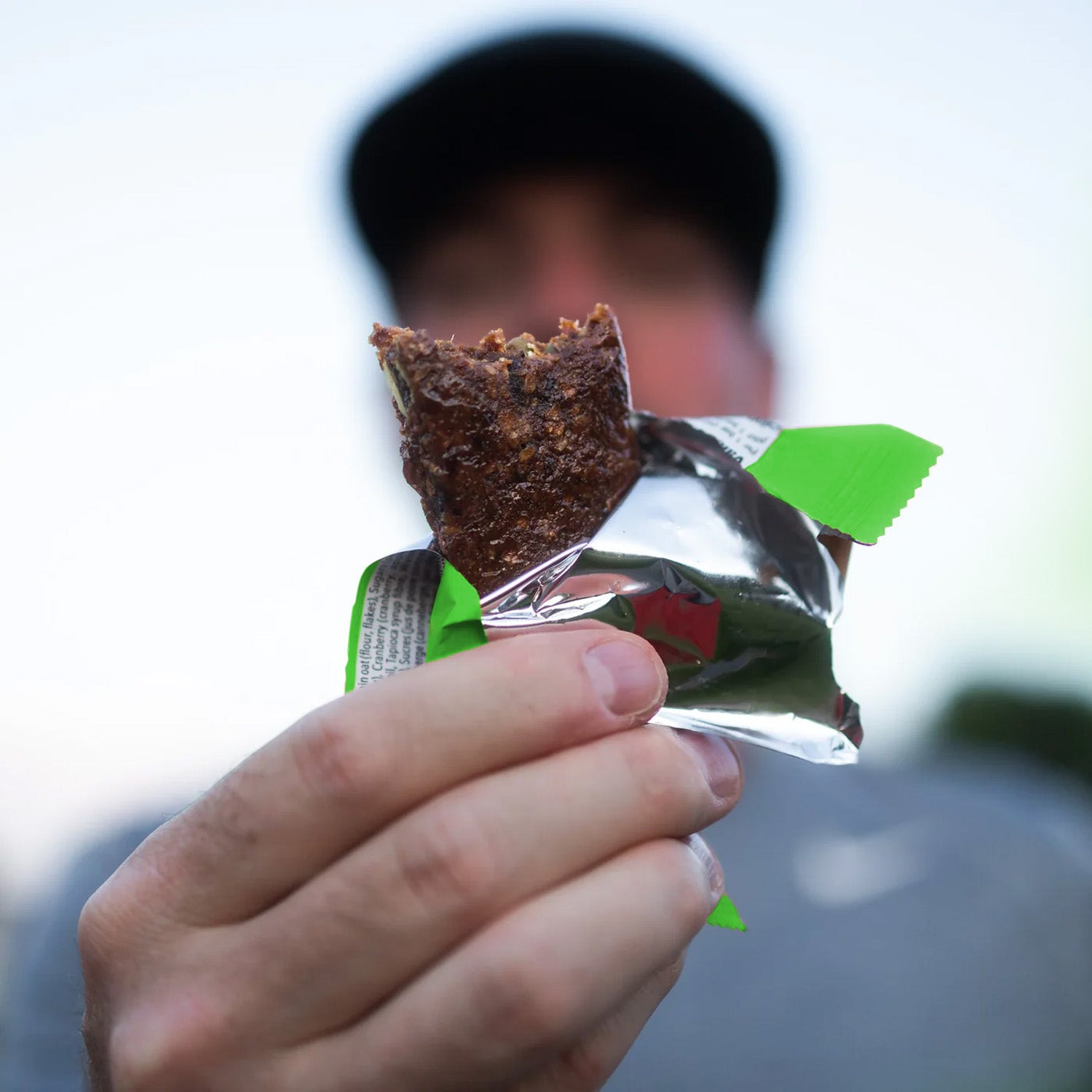
Energy Bars
29–32 g carbs · real food
A familiar, real-food carbohydrate hit 1 to 2 hours out - enough to stock the tank without the heaviness of a full meal.
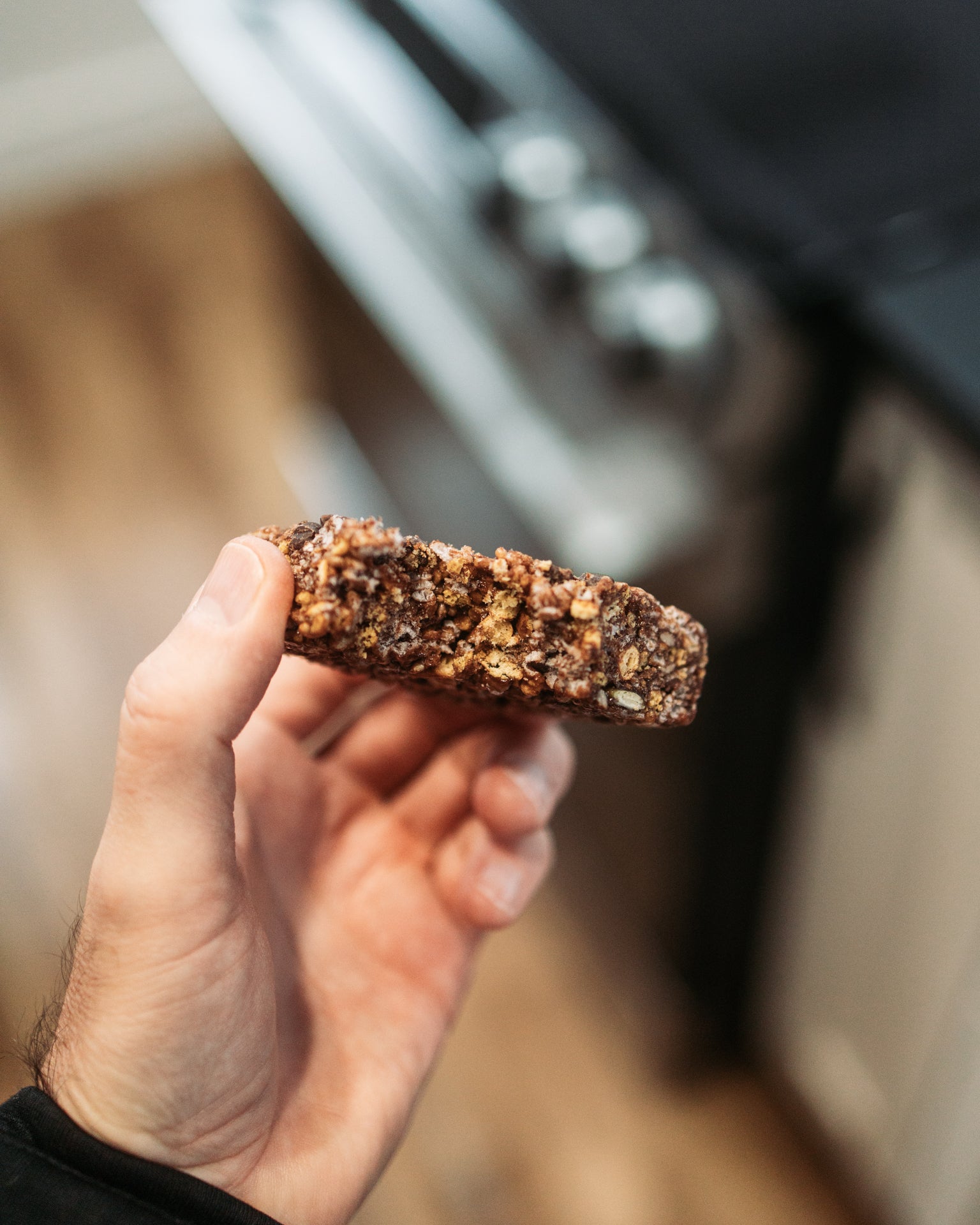
Energy Rice Cakes
Light · easy to digest
When the start is close and you want something gentle - light, clean-digesting, real ingredients, no stomach surprises.

Sport Drink Mix
200–300 mg sodium · 22–23 g carbs
Sip in the lead-up to arrive genuinely hydrated, with a little carbohydrate and the sodium that helps you hold the fluid you drink.
Phase 02 — Performance
How much to eat, and when
There's a moment in every long effort where the tank runs low and the legs go heavy - the wall. Feed your body a steady stream of carbohydrate and you push that moment back, often out of the picture. How much you need scales with how long you're out there:
Under an hour: stored glycogen is usually enough - water and electrolytes will carry you.
One to two-and-a-half hours: aim for 30–60 g of carbohydrate per hour.
Beyond ~90 minutes and into the long stuff: climb toward 60–90 g per hour.
At the higher end, one detail changes everything. Your gut absorbs glucose through a single transporter that saturates near 60 g per hour - pile on more glucose alone and it just sits there. Add fructose, which crosses the gut wall by a different route, and you unlock more usable fuel: a roughly 2:1 glucose-to-fructose blend can lift the carbohydrate your body actually burns by about 50% versus glucose alone. That's why the best fuels are a deliberate blend, not pure sugar.
In practice, 60–90 g/hour is about two to three energy gels an hour, or one gel plus a bottle of Sport Drink Mix. Two habits make it stick: little and often - small amounts every 20 to 45 minutes rather than one big hit - and train your gut by practising race-day fuelling in training, so the volume feels normal when it counts. Keep sodium and fluid coming too; both leave steadily in sweat.
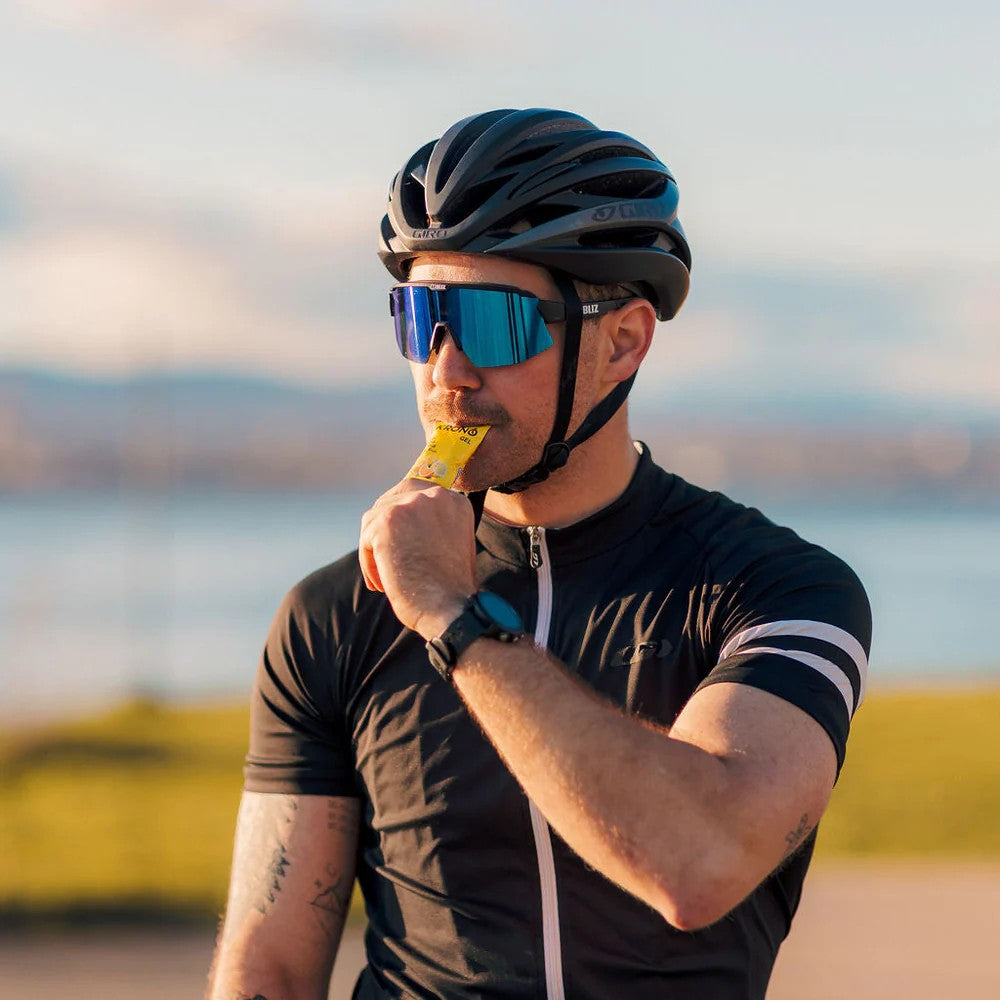
Energy Gels
20–30 g carbs · 80–120 cal · 50–180 mg sodium
The workhorse of the middle miles - smooth, fast, easy on the stomach. One every 20 to 45 minutes keeps the supply steady; caffeinated options give a late-race lift.
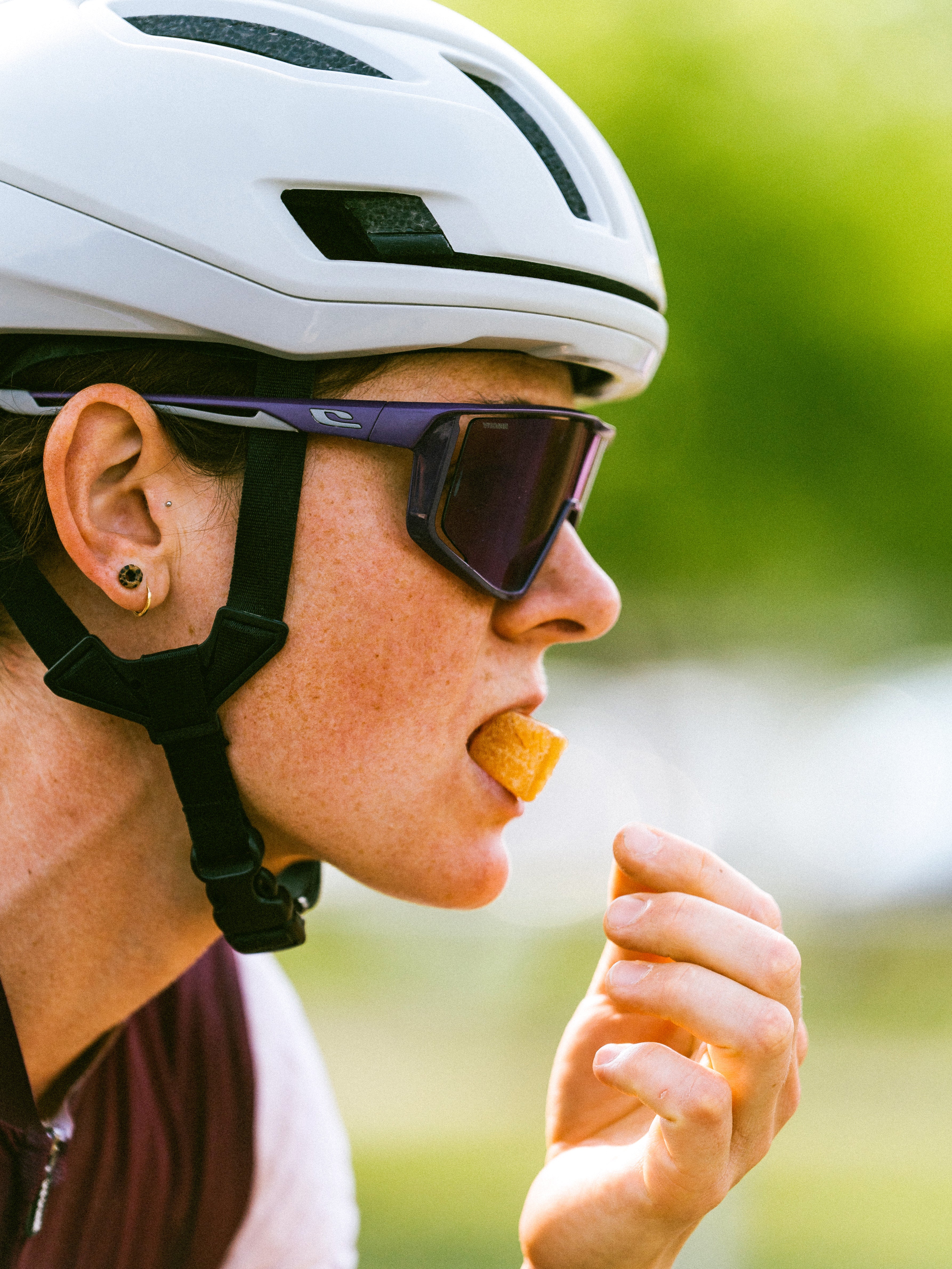
Chews
Dose by dose · Québec maple
Graded, bite-sized energy you can meter out at your own rhythm when you want something to chew.

Sport Drink Mix & Fizz
Carbs + sodium in your bottle
Sport Drink Mix pairs 22–23 g of carbohydrate with 200–300 mg of sodium; Fizz tablets deliver ~400 mg of sodium with minimal calories for pure hydration.
Phase 03 — Recovery
The three R's
Crossing the line feels like the end; physiologically it's a beginning - the window where your body rebuilds and comes back stronger. Recovery comes down to three jobs.
Refuel. Your glycogen tanks are drained and refill fastest right after you stop. In the first four hours, moderate-to-high-GI carbohydrate at about 1.0–1.2 g per kilogram per hour restocks them most efficiently - and delaying by a couple of hours can cut that rate roughly in half.
Repair. Hard efforts micro-damage muscle. Around 20–40 g of protein (roughly 0.3 g/kg) within about two hours provides the building blocks, with muscle protein synthesis peaking in the first few hours.
Rehydrate. You finish lighter than you started - that's fluid. Replace about 150% of what you lost, with sodium to help you hold it. Glycogen is stored with water, so refuelling and rehydrating work hand in hand.
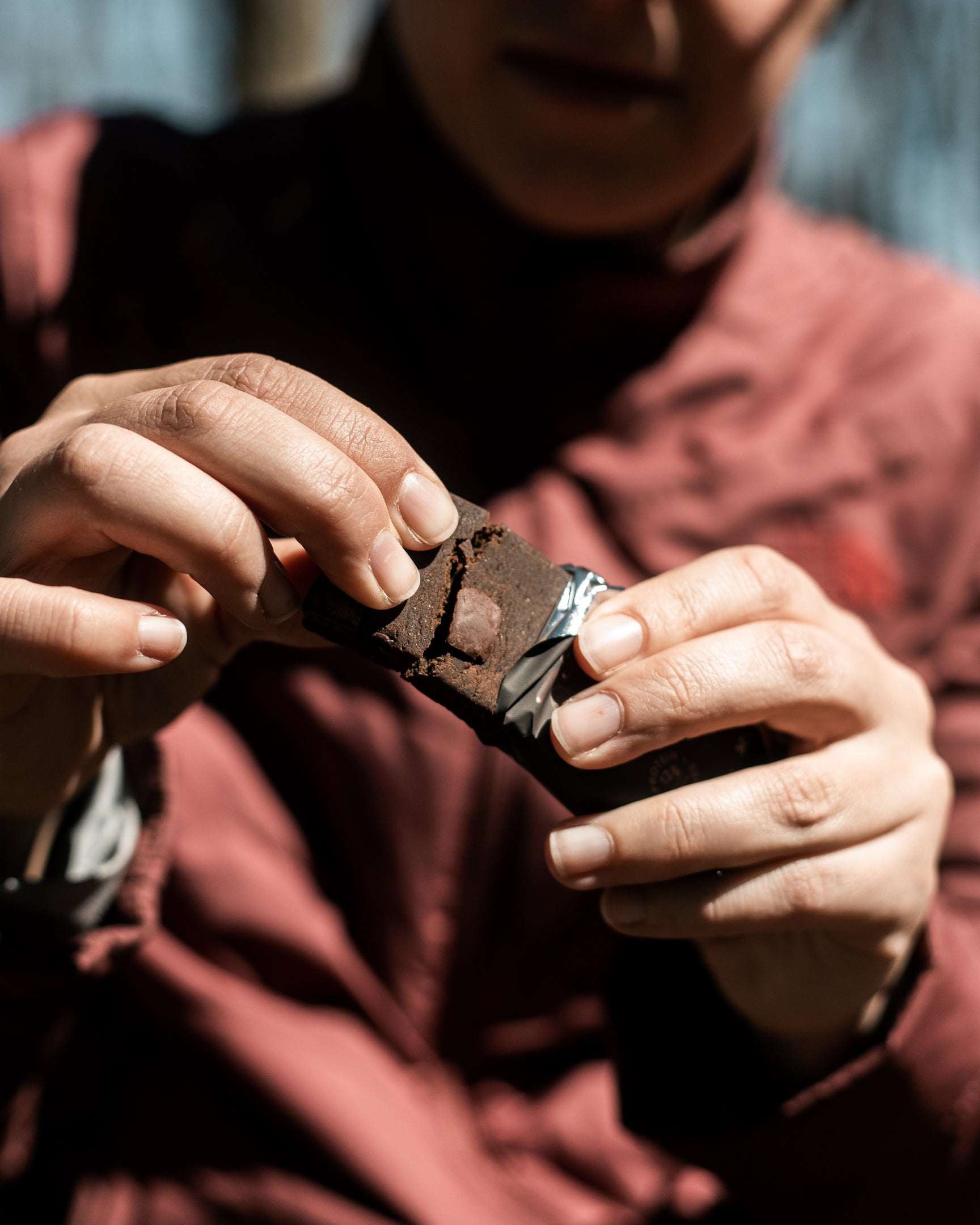
Protein Bars
~10 g protein · 26–28 g carbs
Repair and refuel in one: ~10 g of plant protein for muscle repair alongside 26–28 g of carbohydrate to restock glycogen. The post-effort staple.

Sport Drink Mix & Fizz
Rehydrate + replace sodium
Put back the fluid and salts you sweated out - carbohydrate and sodium to rehydrate, or Fizz for fast, low-calorie replenishment.
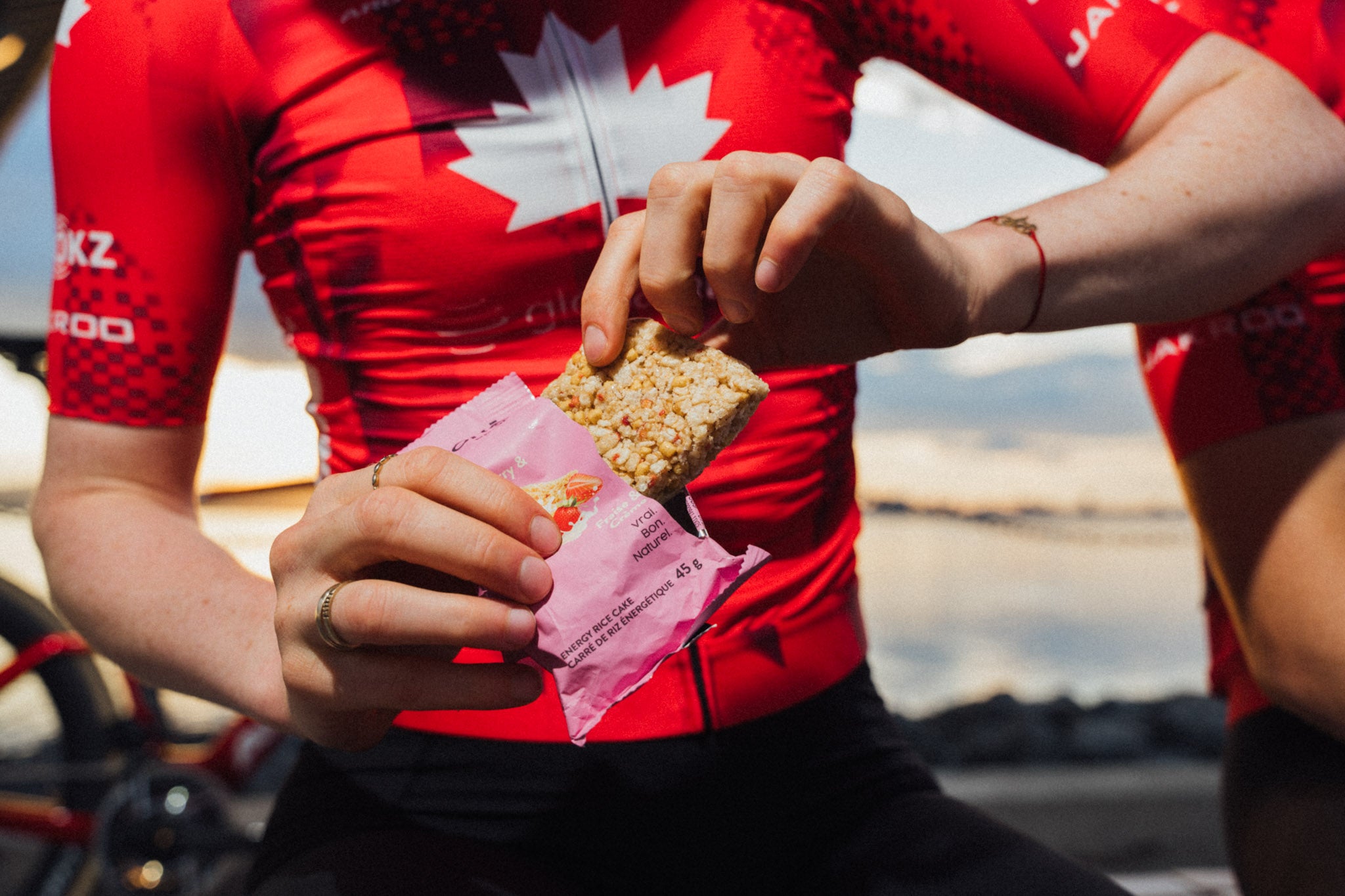
Rice Cakes
Top up glycogen
If your next session is soon, keep the carbohydrate coming - an easy, natural way to hit that 1.0–1.2 g/kg/hour target.
Your fuelling cheat sheet
Everything above, in one place. Use body weight to turn the per-kilogram figures into your own numbers.
| Phase | When | Carbohydrate | Also |
|---|---|---|---|
| Before | 1–4 h before | 1–4 g/kg | Low fat & fibre · start hydrated + sodium |
| Loading (big events) | Days before | 7–12 g/kg/day | Prioritise carbs as the event grows |
| During · short | Under 1 h | Little to none | Water + electrolytes |
| During · long | 1–2.5 h | 30–60 g/h | Fluid + sodium, little and often |
| During · very long | Beyond ~90 min | 60–90 g/h | Glucose–fructose blend (~2:1) |
| After | First ~4 h | 1.0–1.2 g/kg/h | + ~0.3 g/kg protein · rehydrate ~150% of loss |
A note on caffeine: some Krono gels and bars are caffeinated (citrus and Maple & Coffee gels, Chocolate & Espresso bars) — great for a pre-race or late-effort lift, but choose caffeine-free options if you're sensitive, and limit caffeine during pregnancy or for young athletes. These are general guidelines; your ideal numbers depend on your body, your sport and your gut, so test your plan in training first.
True. Good. Natural.
Krono Nutrition is natural sports fuel made in Québec, developed with professional triathlete and sports-science researcher Antoine Jolicoeur Desroches. Every product is vegan, gluten-free, dairy-free, nut-free and made without processed sugars — real food you can trust on your biggest days.
Vegan · Gluten-free · Dairy-free · Nut-free · Made in Québec · Free shipping over $70